Quantcast Vegetarian Starfactory farms

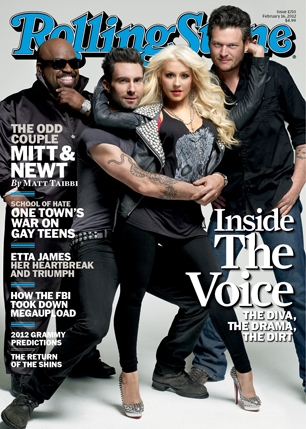
Rolling Stone

The number one magazine for rockers has created an educational and enlightening piece that should persuade music fans to rock every aisle but the meat one.

Rolling Stone‘s “In the belly of the beast” discusses many of the negative consequences of large-scale farming, both animal and environment.

From an inside look behind the undercover investigations of activists to an inside look at how animals live their short lives on these farms, the article thoroughly covers the animal rights scene.

(more…)

Possibly Related Posts:


ABC’s Nightline recently featured a segment on the numerous ag-gag laws making their way through Congress.

“Would you like to see where your dinner came from?” asked Bill Weir during the episode.

Executive Director for the animal welfare group Mercy for Animals Nathan Runkle made an appearance to discuss the laws that seek to make hidden camera investigations on factory farms illegal. It is a move that many activists feel would hamper whistle blowers who out acts of animal cruelty.

(more…)

Possibly Related Posts:


Leona Lewis

Plans to build a mega dairy in Britain have been scrapped, thanks to concerned citizens and environmental agencies.

Leona Lewis is one celebrity who is against buying and consuming milk from battery cows and finds it hard to understand why a plan like the one Nocton Dairy proposed would even be considered in Britain. She would like a complete ban of milk in Britain from cows in these factory farm settings.

“I think it is shocking that in a country like Britain – with our good reputation for animal welfare and farming – that we are even talking about intensive dairy farms… We won’t stop until we know factory milk from battery cows will never be allowed in Britain.”

After announcing it would not establish a mega dairy in Britain, Nocton issued the following statement:

(more…)

Possibly Related Posts:


Several British celebrities have spoken out about a plan to bring factory dairy farms to Britain, including vegetarians Leona Lewis and Chrissie Hynde.

The World Society for the Protection of Animals has launched a campaign, “Not In My Cuppa,” educating British people on the effects of large-scale dairy farms on animals and the environment and asking them to state they would not drink milk from battery cows.

The plan to bring Nocton Dairy to Britain is one of the first in the UK, according to the WSPA. And almost half of the British surveyed said milk made them think of cows grazing in green pastures and 61% said they’d never buy milk produced from such a large farm.

Here’s what the plan could mean in terms of animal welfare and the environment:

(more…)

Possibly Related Posts:


CAFO: The Tragedy Of Industrial Animal Factories (Video)

Written by Vegetarian Star on Tuesday, September 21st, 2010 in Animal Issues, Books, Farming, Food & Drink, Videos.

CAFO: The Tragedy of Industrial Animal Factories

CAFO: The Tragedy of Industrial Animal Factories

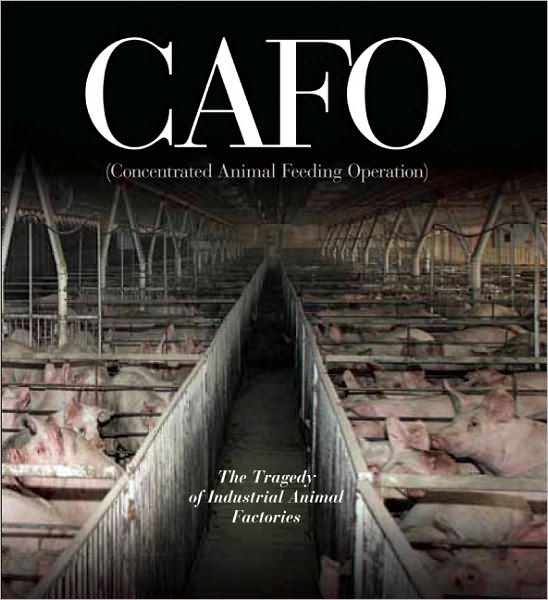
CAFO: The Tragedy of Industrial Animal Factories is meant to offer a behind the scenes look at the factory farms that sadly produce so much of America’s food, such as meat, poultry, fish and dairy. The book edited Daniel Imhoff is said to provide a behind the scenes look at these operations, illustrating the conditions with more than 400 photographs and over 30 essays written by experts in the food, sustainability and animal rights industry such as Wendell Berry, Wenonah Hauter, Fred Kirschenmann, Anna Lappé, Michael Pollan, Eric Schlosser, and Matthew Scully.

(more…)

Possibly Related Posts:


"Eating Animals" Jonathan Safran Foer

"Eating Animals" Jonathan Safran Foer

You always aced any literature test in high school by reading the Cliffs Notes.

That was, until your Honors English teacher decided to write test questions that specifically couldn’t be answered from the yellow book.

Some people!

If you haven’t read Jonathan Safran Foer‘s book about animals and factory farms, Eating Animals, perhaps you’d like to at least look over 10 main arguments he makes in his book for not consuming animals.

The summarized arguments on issues such as pollution, infected animals and human rights of employees may give you the push to give up eating animals entirely or provide arguments to people who ask why you choose vegetarianism.

Factory farmed animals contribute to antibiotic resistance:
“In the United States, about 3 million pounds of antibiotics are given to humans each year, but a whopping 17.8 million pounds are fed to livestock—at least that is what the industry claims. The Union of Concerned Scientists (UCS) has shown that the industry underreported its antibiotic use by at least 40 percent…. Study after study has shown that antimicrobial resistance follows quickly on the heels of the introduction of new drugs on factory farms.” (p 140)

Cruel treatment of animals before they’re even slaughtered:
“Animals are bled, skinned, and dismembered while conscious. It happens all the time, and the industry and the government know it. Several plants cited for bleeding or skinning or dismembering live animals have defended their actions as common in the industry and asked, perhaps rightly, why they were being singled out.” (p 230)

Need to study more before the big “test?”

Visit Sojourners for the other eight key points discussed in Foer’s book.

Possibly Related Posts:


U.S. President Obama speaks to the Business Council in Washington

Journalist and author of Animal Factory, David Kirby, thinks Barack Obama should fight factory farming more aggressively and suggests taking this stance could even help him win votes in the next presidential election.

Obama was helped tremendously in the 2008 election by winning over Iowa, says Kirby in an article from the Huffington Post.

Kirby says Iowa sided with Obama due to his stance on changing policies in factory farming, which many conservative Americans see as an attack on hard working small farmers and personal property.

If Obama is to retain this support, changes in factory farm policies are needed, and Kirby provides a few ways in which the United States president can help both animals and constituents.

One way to do this is by limiting subsidies to corporate farms, which receive as much as 5 billion annually.

“If right-wing opposition to corporate bailouts runs so deep, then Obama should get some mileage from his promise to end the multibillion-dollar corporate farm subsidy boondoggle,” writes Kirby.

Kirby also thinks Obama should also tackle the monopoly big corporations have over the food industry and redirect programs to help small family farmers, something also valued by conservatives.

Read more at the Huffington Post.

Possibly Related Posts:


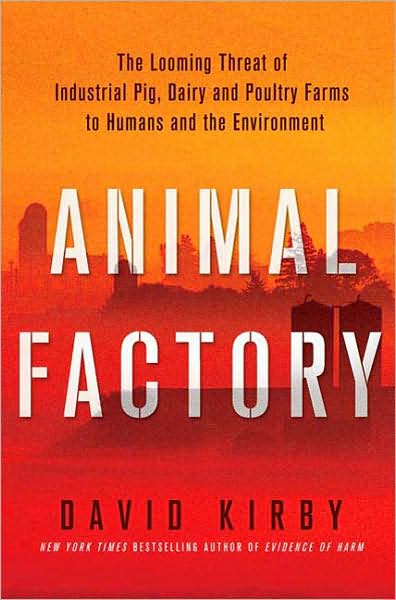
Animal Factory by David Kirby

Animal Factory by David Kirby

Journalist David Kirby recalls the night he slept near a pig farm during his investigations of factory farms.

Kirby wasn’t able to fall asleep that night, as all he heard were pigs fighting, screaming and squealing at each other, a sound he described as “kids being tourtured.”

Those three years of experiences that led to his book, Animal Factory, are just a few that he shared in a recent Time magazine interview, “The Problem With Factory Farms.”

What Exactly is a Factory Farm?
We collectively refer to these facilities as factory farms, but that’s not an official name. The government designation is CAFO, which stands for Concentrated Animal Feeding Operation. Basically it’s any farm that has 1,000 “animal units” or more. A beef cow is an animal unit. These animals are kept in pens their entire lives. They’re never outside. They never breathe fresh air. They never see the sun.

What happens to the wastes from factory farms?
The manure is liquefied. It gets flushed out into an open lagoon, where it is stored until farmers can use it on what few crops they do grow. There’s just so much of it, though. I’ve seen it sprayed into waterways and creeks. These “lagoons” filled with waste have been known to seep, leak, rupture, and overtop. This stuff is untreated, by the way. We would never allow big open cesspools of untreated human waste to just sit out on the ground near people’s homes and schools. And yet because it’s agriculture, the rules are different.

Read the entire interview with Kirby at Time.

Possibly Related Posts: